Into the Fog
September 15, 2026
 By midmorning, we were soaked.
Rain had found its way down the collar of my supposedly waterproof jacket, through my supposedly waterproof pants, and into nearly everything else. Fog packed us in, obscuring the Point Reyes coastline and leaving us able to see only the trail immediately ahead. The charred trees we had passed in sunshine the day before now stood like ghosts in the mist.
And still, we hiked on.
Ahead of me, eighth graders nearly disappeared behind their bulging backpacks, carrying not only their own belongings but also pieces of our collective life: pots and pans, food, fuel, tents, tarps. Our student navigators consulted compasses and traced trails with their fingers across water-resistant maps, stopping at each fork to make sure we were heading the right way. When someone struggled, someone else quietly added more weight to their own pack. We stopped for snacks, laughed (ok, moaned) about how impossibly wet we were, and kept going.
 As we began our descent toward Coast Camp, familiar figures emerged from the fog, making their way up the trail: classmates from two other advisories, equally drenched and equally alive!
One student plopped beside me during our brief, wet trailside reunion.
“A skunk came into my tent last night.”
“What did you do?” I asked, wide-eyed.
“I waited it out.”
Of course she did.
These kids have been preparing for moments like this since kindergarten.
Their Outdoor Ed journey began with a single night away at Costanoa and a parent alongside. Year by year, the adults have stepped farther back as the children have stepped farther forward. They have learned to pitch tents, navigate trails, cook meals, clean up after one another, carry part of the group’s load, and figure things out when things don’t go according to plan.
 As one eighth grader put it last year, “Outdoor Ed helps you feel comfortable with what’s uncomfortable.”
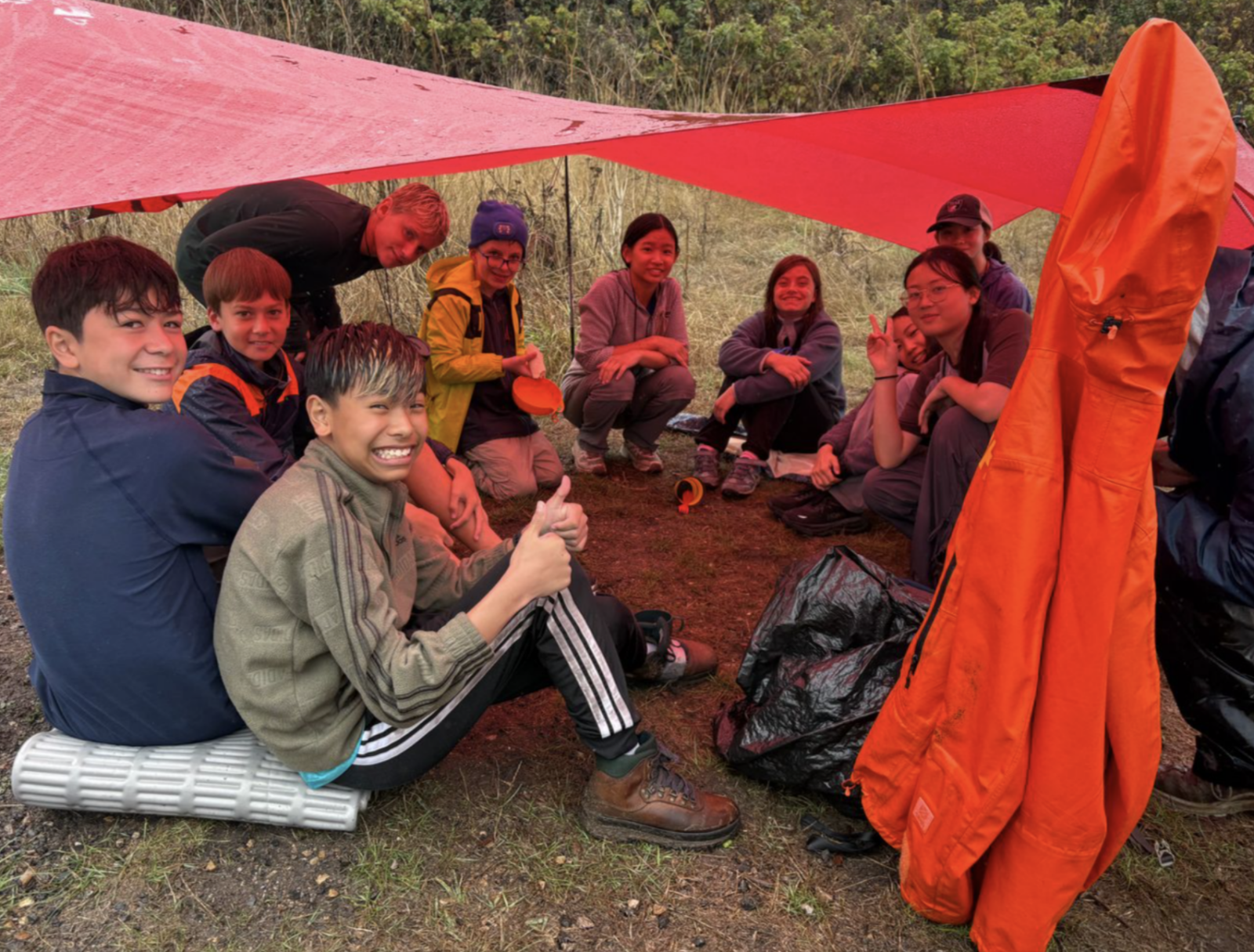
That afternoon, we pitched tents in the rain. We stretched tarps in the rain. We cooked in the rain. And then, somehow, we simply began to be in the rain. We changed into whatever dry clothes we had managed to protect, pulled on warm socks, and slipped our feet into Ziploc bags before putting them back into soaked hiking boots—a surprisingly effective bit of backcountry ingenuity! Some disappeared into tents to “yak,” others gathered under tarps to play cards, and a few prepared the evening meal. A little ecosystem took shape around me. We were wet. We were resourceful. We carried on. But make no mistake: we really, really wanted the rain to stop.
And sometime around eight o’clock, it finally did.
There was just enough daylight left to make our way to the beach.
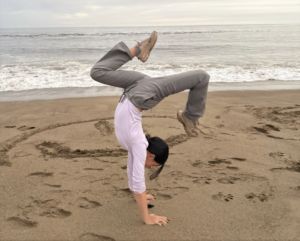
There, I watched our students chase waves and sprint, laughing from the incoming surf. They danced. They posed. They linked arms. They talked and wandered and simply delighted in one another. No devices. Nothing to scroll. Nowhere else to be.
The next morning, sunlight began creeping over the ridge. Tule elk grazed along the crest, their white tails catching the early light, and all of us looked up in wonder. Later, along Limantour Beach, we spotted sea lions before making our final lumbering trek through the sand toward the yellow school bus that would carry us home.
I had come to Point Reyes carrying a grief that, for several weeks, had felt something like its own dense fog. My big sister had died three weeks earlier, and I had been struggling to find my way through it. Somewhere in the very literal fog of Point Reyes—walking beside these remarkable young people, soaked to the bone, laughing (and yes, moaning), noticing, carrying things for one another—I felt something begin to lift.
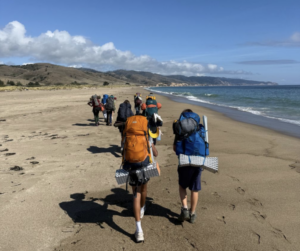
Perhaps there is something about having only the trail in front of you.
For three days, our eighth graders had practiced something increasingly rare: being fully where they were. They had wrestled without being rescued, discovered what they could carry, and learned to depend upon one another.
Know and be known. Listen and be heard. Dive in.
Sometimes the deepest learning happens when the fog rolls in, the rain comes down, and the only way forward is together.
Thank you, Class of 2027, for welcoming me on the adventure and for the healing on the journey!
Warmly,
Heather